It started with 2,500 people, a patch of grass, and a country where homosexuality was a criminal offence. Seventeen editions later, Pink Dot Singapore is back — and this time, love is taking over Hong Lim Park for the 18th year running.
Mark Your Calendar for 27 June
Singapore’s annual Pink Dot celebration returns to Hong Lim Park on Saturday, 27 June. This is the 18th edition of what has become one of the most quietly powerful expressions of LGBTQ+ visibility in Asia. The theme, confirmed on Pink Dot’s official social media channels, is “Different Stories, Same Love” — a message that lands just as hard in 2026 as it did when the whole thing kicked off in 2009.
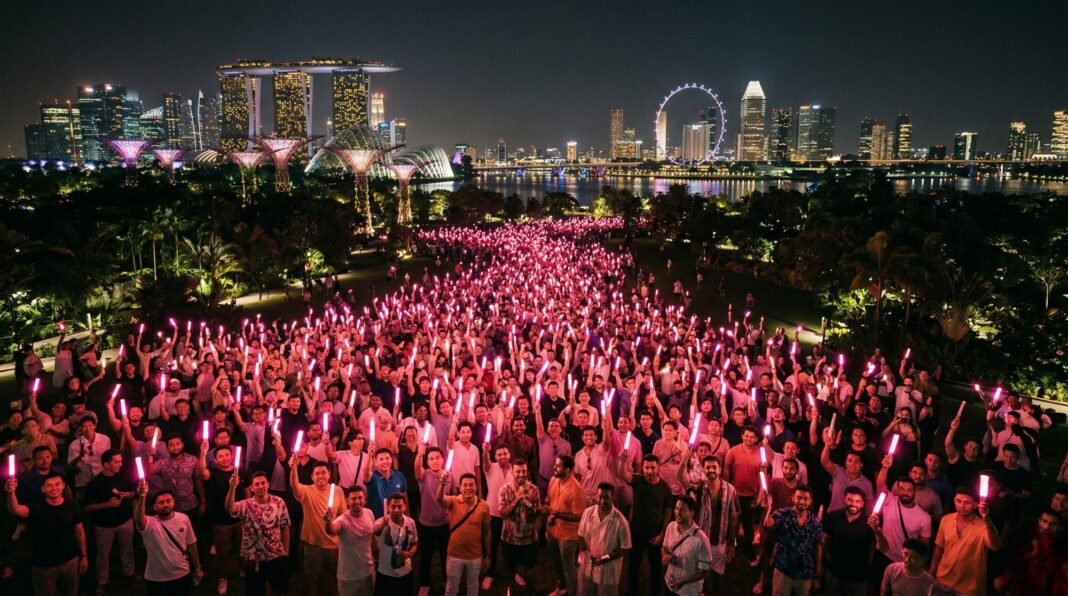
The event follows its traditional format: doors open at 4 PM with community tents, the Pink Dot concert kicks off at 7 PM, and then comes the moment everyone is there for. At around 7:30 PM, thousands of participants raise their lights, phones, and torches to form a single glowing pink dot when seen from above. One visual. Total silence from every cynic in the room. If you have never seen it, it is worth the flight to Singapore alone.
From a Grassroots Gathering to a Movement That Changed the Law
Pink Dot SG launched in 2009 as a grassroots gathering of LGBTQ+ Singaporeans and their allies. Attendance climbed from 2,500 in year one to 28,000 by 2015. That kind of growth does not happen by accident — it happens because people feel something real when they show up.
The name carries its own quiet manifesto. Pink was chosen because it is the colour you get when you mix the red and white of the Singaporean flag. This was never about outsiders importing a foreign cause. It was always Singaporeans claiming their own flag, their own colours, and their own right to love.
For years, the event called for Singapore to decriminalise homosexuality. That goal was achieved in 2022. Rather than declare victory and disappear, the movement widened its lens. The fight for equality, as any queer person knows, does not end with the repeal of a single law.
The Rules of the Park — and Why They Make It Mean More
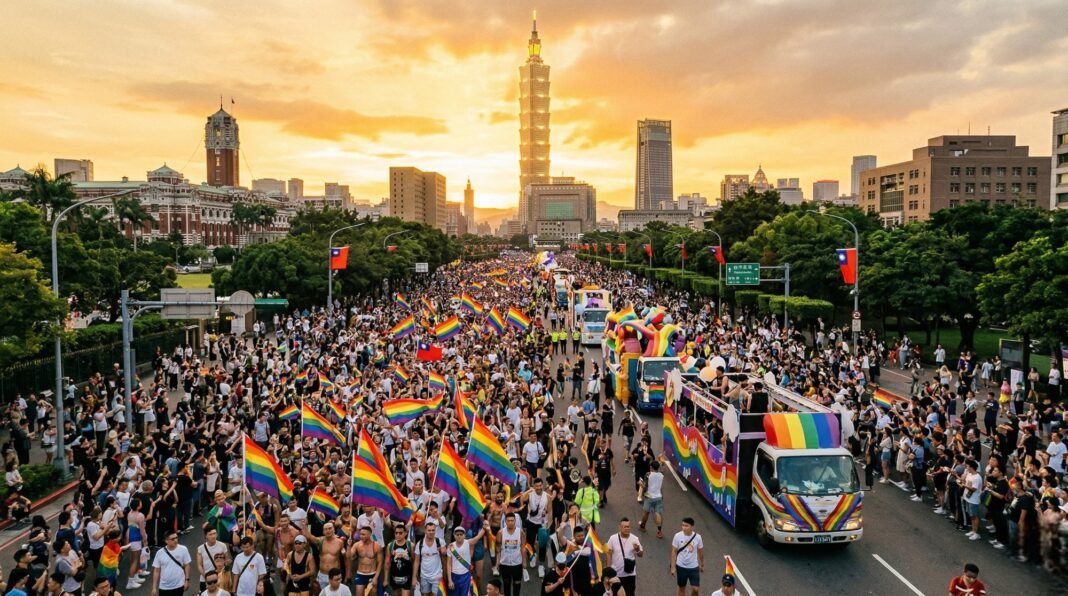
Pink Dot is not a parade. No floats, no marching bands, no closed-off streets. That is not a limitation — it is exactly what makes it singular.
Hong Lim Park sits in the heart of Singapore’s Central Business District, established in 1885 and accessible at the junction of North Canal Road and South Bridge Road. It is one of the oldest public gardens in the city — and it holds a unique distinction as the home of Speakers’ Corner, the only venue in Singapore where public assemblies are permitted without a police permit. That context is everything. In a country where protests operate under strict regulations, Pink Dot has chosen, deliberately and defiantly, the one patch of ground where gathering is allowed.
Authorities have clamped down over the years — restricting the event to daylight hours, banning non-Singaporean citizens from the event space, prohibiting multinational companies from sponsoring, and threatening organisers with serious fines for violations. Pink Dot’s response? Adapt. When foreign sponsorships were banned, local Singaporean companies stepped up by the dozens. When the format was restricted, organisers found new ways to make the message land.
Gay Pride in Singapore is not about floats or marching. It is about unity, visibility, and the particular kind of resilience that belongs to a community that simply refuses to disappear.
The Work That Still Needs Doing
The repeal of Section 377A in 2022 was a landmark moment — one Pink Dot fought for across more than a decade of peaceful, persistent presence. But the government repealed that law while simultaneously introducing new legislation to prevent the advancement of marriage equality. One step forward, a wall erected immediately after. That is the reality Pink Dot 18 walks into.
Until 2022, same-sex intimacy between men was criminalised under Section 377A. The law is gone now, but same-sex marriage and full legal protections remain absent. Pink Dot is therefore both a celebration of visibility and a demand for more. “Different Stories, Same Love” speaks directly to that tension — acknowledging that queer life in Singapore spans families, ages, identities, and experiences, and that every single one of those stories deserves equal legal dignity and social recognition.
The movement has also seeded something far beyond Singapore’s borders. Pink Dot events have been organised in Hong Kong, Montreal, Toronto, New York, Okinawa, Utah, Anchorage, London, Penang, and Taiwan. A global family, built from one lit-up patch of grass. All of them watching on 27 June.
Frequently Asked Questions
When and where is Pink Dot Singapore 2026?
Saturday, 27 June at Speakers’ Corner in Hong Lim Park. It is free to attend.
Can tourists and foreigners attend Pink Dot Singapore?
The event space is restricted to Singapore citizens and permanent residents under the Public Order Act, which governs assemblies at Speakers’ Corner. Not a local? You can still show up — visitors are welcome to cheer from outside the barricades.
What happens at Pink Dot, and what should I wear?
Doors open at 4 PM with community tents, the concert begins at 7 PM, and the iconic illuminated formation — where participants use lights and phones to create a glowing pink dot from above — happens at around 7:30 PM. Wear pink. Obviously.
Pink Dot Singapore 2026 is more than an annual event on a patch of park grass. It is proof that a community can hold its ground, adapt to adversity, change its laws, and still show up year after year to say that love is worth fighting for. Whether you are planning a trip to Singapore or following the story from afar, 27 June is a date worth marking. For more stories celebrating queer culture and community around the world, follow Facetheboys and stay close to the voices and events that matter.