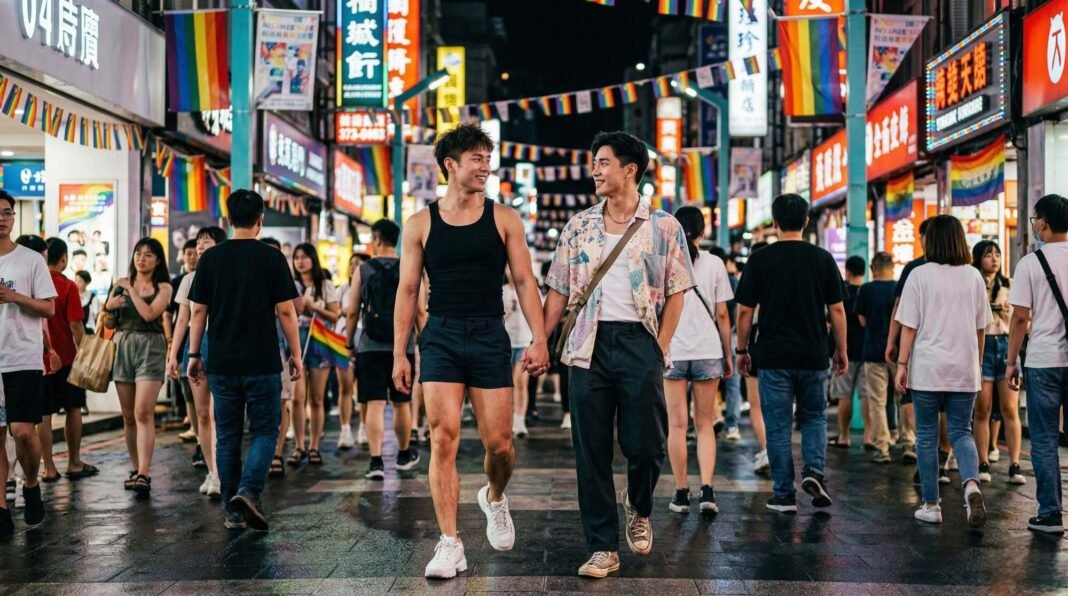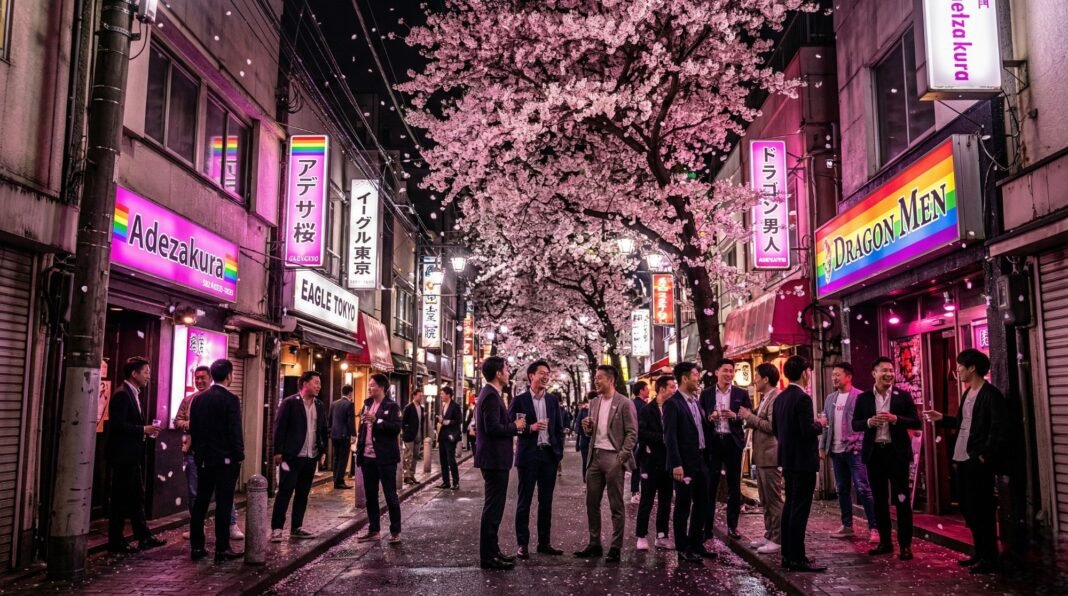
Three hundred gay bars. Five city blocks. Zero apologies. That is Shinjuku Ni-Chōme in a sentence — and it is the single most concentrated stretch of queer nightlife anywhere on Earth.
The Scene on the Ground
Ni-Chōme holds the world’s highest concentration of gay bars. Not the most famous. Not the most Instagram-ready. The highest concentration, full stop. It spans just 300 meters in each direction, and yet this compact neighborhood bursts with life — gay bars, mixed bars, clubs, drag nights — drawing crowds every weekend without fail.
Naka-dori Street is the beating heart of it all: roughly 200 meters of bars and clubs representing the full spectrum of the community, from gay and lesbian venues to drag shows and mixed spaces. On weekend nights, you cannot walk a straight line through it even if you wanted to.
The social architecture here has no Western equivalent. Most of Ni-Chōme’s hundreds of venues seat fewer than a dozen people, each one catering to a specific subset of queer culture. That intimacy is not an accident — it is the design. When a bar holds twelve people, staff and regulars notice newcomers fast, and a single drink can turn into a genuine conversation. Think of it less as a neighborhood and more as a chain of micro-communities: you belong for one drink, then move on to the next. It is a social format that mega-clubs and sprawling gayborhoods simply cannot replicate.
Why Ni-Chōme Hits Different Right Now
The context around this neighborhood in 2025 makes visiting feel like more than a night out. Japan remains the only G7 nation that still excludes same-sex couples from the right to legally marry and receive spousal benefits. And yet the legal tide is visibly turning. On 13 December 2024, the Fukuoka High Court ruled Japan’s ban on same-sex marriage unconstitutional — the most clear-cut verdict ever made in support of same-sex marriage in the country. Recent polls show around 70 percent of Japanese citizens now support same-sex marriage, with support running especially high among younger generations.
That tension — a society culturally warming to queer identity while its government drags its feet — gives Ni-Chōme a charge that is hard to articulate until you feel it. Many queer people in Japan still enter heterosexual marriages because pursuing same-sex partnerships feels impossible. That reality only deepens the significance of a place like Ni-Chōme, which offers Tokyo’s queer community genuine space for full self-expression, all while remaining rooted in Japanese etiquette and culture.
The neighborhood is also evolving in real time. What makes Ni-Chōme truly special is not its size or its bar count — it is its range. Unlike most gay districts, which skew almost exclusively toward gay men, Ni-Chōme has something for everyone: legendary lesbian bars like Gold Finger and Dorobune, the beloved drag-queen-hosted Campy!, and now Kingdom Tokyo, Shinjuku Ni-Chōme’s first fetish and kink-themed bar. Old institutions and new energy are coexisting here, and the results are electric.
Who’s Walking Through That Door
Ni-Chōme has always been built for its local queer community, and that remains true. Most bar owners do welcome new and non-Japanese customers, but the scene runs on its regulars — Japanese patrons who have made these venues their own. Know that before you book your flight. This is not a neighborhood performing itself for tourists. It is a living, functioning community that welcomes guests who arrive with the right spirit.
For international visitors, there are clear entry points. Dragon Men is a foreigner-favorite with indoor and outdoor seating — one of the largest international gay bars in the area, with enough room to move, sit, or simply take it all in. The revamped AiiRO Café is the hottest street-corner gay café and bar in Shinjuku, instantly recognizable by its iconic rainbow torii gate and widely regarded as the ideal first stop of the evening. Eagle Tokyo has become a major draw for international visitors, organizing Japan’s largest drag show — Opulence — as well as Japan’s largest gay party, Agartha.
The neighborhood is opening up. There is a broader understanding of LGBTQ+ issues among patrons than there once was, and more heterosexual visitors in their late twenties and early thirties are exploring the area alongside a steady stream of international travelers. But Ni-Chōme’s identity stays intact: this district exists first and foremost for its LGBTQ+ community, and the unspoken rules that protect that space deserve your respect, regardless of who you are.
Plan Your Trip
Getting there is straightforward. Ni-Chōme sits within easy walking distance of three train stations: Shinjuku San-Chōme, Shinjuku Gyoenmae, and Shinjuku Station. Once you arrive, you will find bars, restaurants, cafés, saunas, love hotels, pride boutiques, host clubs, nightclubs, and more packed into a remarkably small footprint.
Etiquette matters once you are inside. Public displays of affection remain uncommon across Japan, so read the room and follow the locals’ lead. On photography: some people in Ni-Chōme are not out, and their privacy is not negotiable. If you photograph the street and capture faces without clear consent, blur them before posting anything online.
Practically, the move is to start early at a standing bar or mix bar, then migrate to a club later for DJ nights or performances. Cover charges are standard across bars and small eateries in Japan — it is not a sign of unwelcome, just local practice. Knowing this in advance saves the awkwardness. Bring cash, bring curiosity, bring manners. Ni-Chōme will handle the rest.
Frequently Asked Questions
Is Shinjuku Ni-Chōme safe for gay tourists?
About as safe as it gets, anywhere in the world. Japan’s overall crime rates are extremely low, and Ni-Chōme is a well-established queer community with decades of experience welcoming international visitors. You are in good hands.
Are foreigners allowed in all bars in Shinjuku Ni-Chōme?
Not all of them — some venues are members-only or primarily serve their regular Japanese clientele. That said, a strong number of bars are explicitly foreigner-friendly, including AiiRO Café, Dragon Men, Eagle Tokyo, and Campy!, all of which are well accustomed to international guests.
Is same-sex marriage legal in Japan?
Not yet. As of 2024, Japan remains the only G7 country without full legal recognition for same-sex marriages. Multiple courts have now ruled the ban unconstitutional, though, and momentum is building — which makes this a genuinely pivotal moment for LGBTQ+ rights in the country.
Shinjuku Ni-Chōme is not simply a nightlife destination. It is a neighborhood that has held space for queer joy, community, and resilience for over seven decades. The bars are tiny. The history is enormous. And the energy right now — with Japan’s legal landscape actively shifting toward equality — is unlike anything this place has seen before. If you are heading to Tokyo, make time for Ni-Chōme. You will not leave unchanged. For more queer travel, culture, and community, follow Facetheboys.