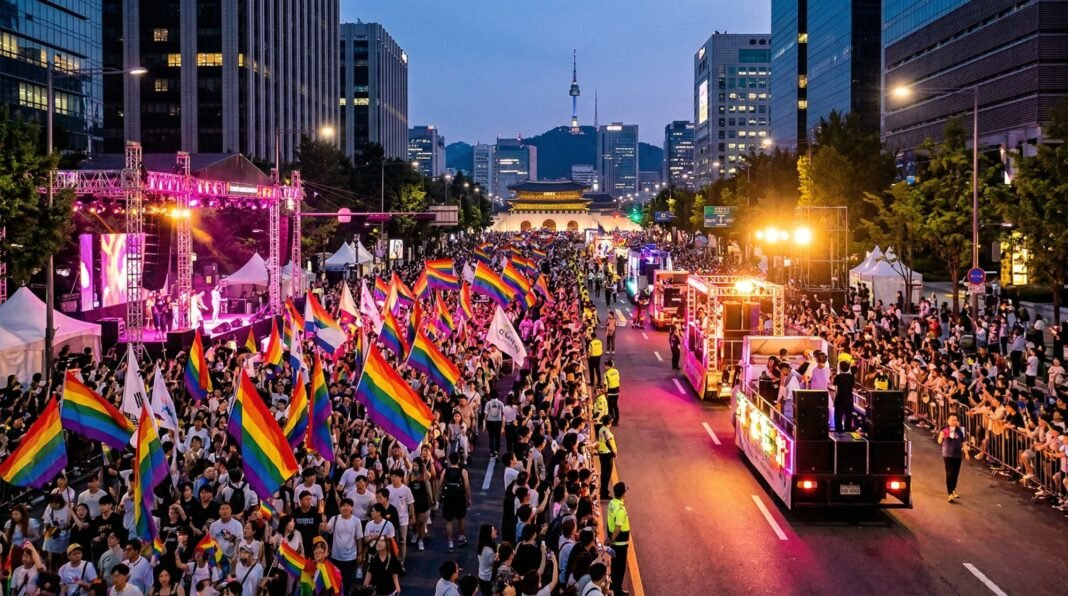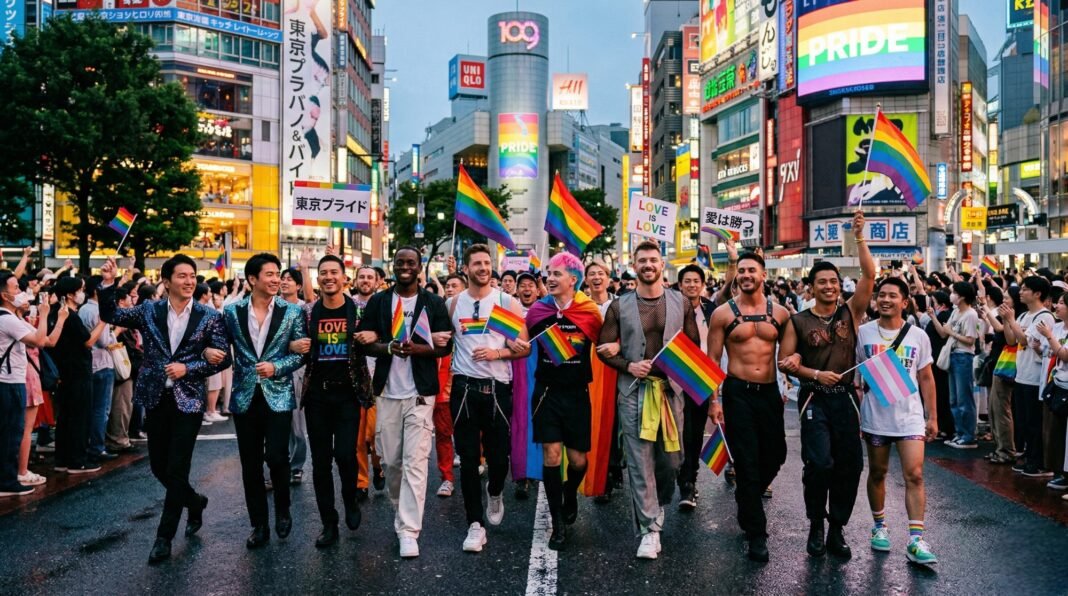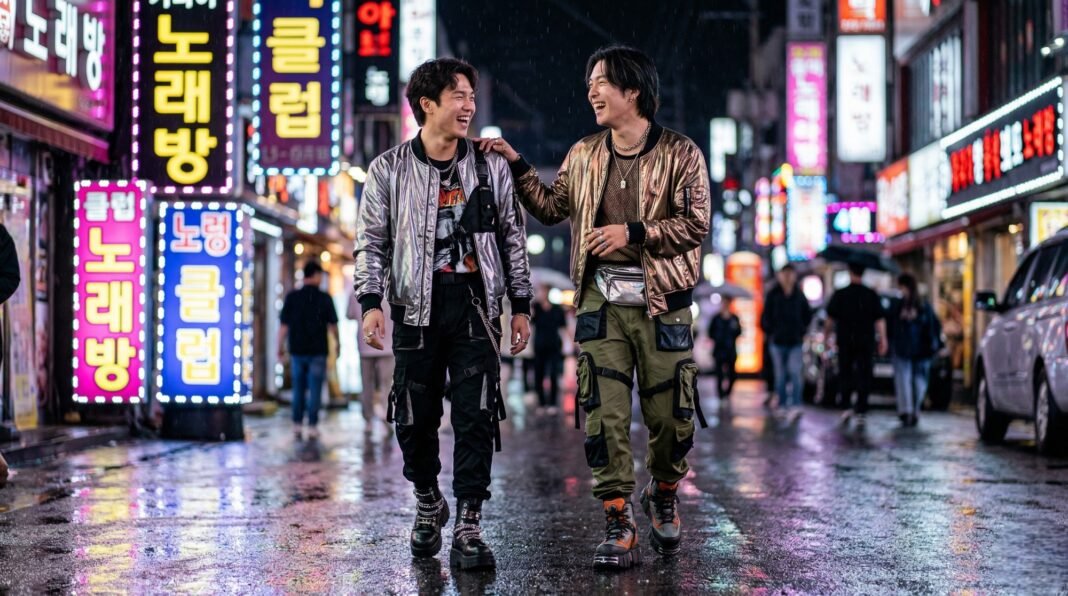
Seoul didn’t ask for permission to become the most influential city in men’s fashion — it just became it. According to a report by Vogue Business, K-pop influences over 30% of global luxury retail trends in 2026. That number doesn’t land like a cultural footnote. It lands like a takeover. And the vehicle driving it isn’t just the music — it’s the wardrobe, the concept, the studied audacity of men who wear pearls with blazers and make everyone else look underdressed for simply wearing denim.
The Aesthetic That Ate the Rulebook
For decades, the unspoken law of men’s fashion was restraint. Fit well, coordinate, don’t try too hard. K-pop spent the last several years methodically dismantling every one of those instructions. By 2026, the binary has dissolved entirely. Male idols move freely through lace, pearls, and cropped blazers while female idols command power suits and masculine silhouettes. This isn’t androgyny as provocation — it’s androgyny as the default setting.
The unisex approach has made fashion more accessible. It’s no longer about who the clothes were made for, but how you style them. That reframe matters enormously for gay men who have long operated outside the either/or logic of traditional menswear. K-pop didn’t arrive late to this conversation. It arrived and rewrote the agenda entirely.
Korean fashion labels experiment freely with bold colors, unconventional materials, and unexpected silhouettes. The result is a maximalism that feels controlled — theatrical without being costumey, loud without being lost.
The Trends Actually Worth Your Attention
Not everything coming out of Seoul deserves space in your wardrobe, but several trends 2026 has produced are genuinely wearable outside a music video context. The standout is Liquid Metallic — head-to-toe silver, chrome, and iridescent fabrics that shift color with the light, heavily influenced by Cyber-Noir music video concepts. For anyone who’s spent time in a club or at a Pride event, this reads less like fashion risk and more like fashion logic.
Accessories have stopped being extras. They’re now structural. Harness bags, tech-belts with multiple attachments, and Shoulder Armor in soft fabrics all trace back to gaming aesthetics bleeding into K-pop’s visual language — building a character look that feels hero-ready and tactical at once.
Then there’s the counterintuitive twist: 2026 has also seen a real rise in Halmeoni (Grandmother) Style — soft knits, muted vintage tones, and granny-adjacent layering sitting comfortably alongside the chrome and the harnesses. The secret is the 70/30 rule: ground most of the outfit in something familiar, and let one statement piece do the theatrical heavy lifting. Structured leather jackets and faux-fur-lined coats balance military ruggedness with modern sleekness, while wide-leg silhouettes evolve into refined, tapered utility pants. It’s a wardrobe built on productive tension — and it looks extraordinary for it.
The Idols Turning Luxury Houses Into Fans
Luxury houses are scrambling to lock down ambassadorships and front-row placements. The global fashion stage no longer belongs to Hollywood stars or European aristocracy alone — it belongs to idols whose stage wardrobes, internet-breaking campaigns, and off-duty fits set the pace for style worldwide.
The numbers are impossible to ignore. Searches for idol-worn items rise 124% post-appearances per the Lyst Index. Jungkook — BTS’s youngest member and arguably the most commercially potent man in fashion right now — earned his nickname honestly. “Sold Out King” is not hyperbole. Whether it’s the kombucha he drinks or the knit set he wears, everything he touches disappears from shelves within days.
Few idols can embody Louis Vuitton’s maximalism without losing themselves in it, but J-Hope’s Louis Vuitton era was a match made in neon heaven. One day he’s in playful streetwear, the next in avant-garde tailoring — front-row at fashion week or courtside at a basketball game, heads turn regardless. Meanwhile, Bang Chan of Stray Kids caught Fendi’s eye, earning an ambassadorship built on genuine versatility: sharp leather jackets, clean tailoring, monochrome palettes. At Milan Fashion Week, his grounded confidence stood out against flashier peers.
These aren’t celebrity endorsements in the traditional sense. These are idols actively shaping what houses produce next — a creative feedback loop that has Seoul functioning as a design capital in its own right. The city now rivals Paris as a fashion export hub, with Korean brands riding 43% mainstream retail growth since 2021.
Why This Moment Belongs to You
There is something specifically freeing about what K-pop is doing to men’s fashion right now — and for queer men, the resonance runs deeper than trend-following. K-pop doesn’t just dictate what fans wear; it shapes how they express identity. Fluid gender expression, nostalgic Y2K, and minimalist techwear are all trends amplified by idols. In 2025 and into 2026, K-pop is the style compass for Gen Z across Asia, Europe, and the Americas.
The practical takeaway is not to wholesale adopt the stage looks from a BTS comeback video. It’s to absorb the underlying permission structure. Korean street fashion right now balances sharp silhouettes with effortless wearability, pulling from utilitarian workwear, refined tailoring, and retro outdoor aesthetics into something cohesive and modern. The goal is intentionality, not costume. Every piece placed with purpose, every texture chosen in conversation with the next.
The global Korean fashion market, valued at USD 10.2 billion in 2025, is anticipated to reach USD 30.8 billion by 2033. The infrastructure to shop this aesthetic — Seoul-based e-commerce, Western stockists carrying Korean labels — is only going to expand. Getting in now, before K-pop maximalism becomes the diluted version of itself that ends up in every high street chain, is both a style decision and a timing decision.
Frequently Asked Questions
What are the biggest K-pop fashion trends for men in 2026?
The standout looks include Liquid Metallic fabrications, modular techwear accessories like harness bags and tech-belts, gender-fluid unisex tailoring, and the surprisingly compelling Halmeoni vintage aesthetic layered against futuristic elements. That last one sounds like a contradiction until you see it styled correctly — then it makes complete sense.
How can I incorporate K-pop style into everyday outfits without going full stage look?
Start with one statement piece — a chrome accessory, a structured oversized blazer, a pearl detail — and build the rest of the outfit in neutral, familiar staples. K-pop stylists rely on the 70/30 principle for a reason: one bold move lands harder when everything around it is grounded.
Which luxury brands are most tied to K-pop idol style right now?
Louis Vuitton, Fendi, Dior, Givenchy, and Celine are among the most prominent houses with active idol ambassadors or established front-row presences. Korean labels like ADER Error, We11done, and Wooyoungmi are equally worth your attention for more direct Seoul-sourced influence — and often, more interesting design risks.
K-pop’s refined maximalism isn’t asking men’s fashion for permission anymore — it already rewrote the rules and left the old ones on the floor next to a liquid chrome harness bag. The dissolving of gender norms, accessories elevated into structural elements, the insistence on looking like you mean it — these aren’t trends that vanish with the next album cycle. They’re a new operating language for how men get dressed. Whether you’re building a full look or finally buying the pearl necklace you’ve been eyeing for months, the invitation from Seoul is open. Follow Facetheboys for more on the culture, the style, and everything worth paying attention to.