Men spent more money on beauty last year than women did — not in total, but in growth rate, and the gap is wider than you’d think.
According to Barclays’ Man in the Mirror report, men’s beauty spending increased by 9.9% in 2024, nearly double women’s 5.8%, with Gen Z men driving much of that surge. The category once defined by a stick of deodorant and a blue-labeled body wash is now a multibillion-dollar cultural force reshaping what it means to take care of yourself. Industry analysts have a name for it: the Manissance. And if you’ve been watching what’s happening in bathrooms, barbershops, and beauty aisles lately, you already know it’s real.
From the Shelf to the Serum Bar — The Scale of the Shift
The numbers behind this moment are staggering. Men’s grooming sales in the United States topped $7.1 billion in 2025, up 6.9% year over year, according to market research firm NielsenIQ. Globally, the picture is even bigger. The men’s grooming products market is set to grow from $74.39 billion in 2025 to $79.31 billion in 2026 at a compound annual growth rate of 6.6%, fueled by changing male lifestyle habits, urbanization, and celebrity influence.
This is not a blip. The market is expected to reach $101.35 billion by 2030 at a CAGR of 6.3%. And driving much of that growth is a meaningful shift in what men are actually buying. Once a category defined by minimalist products and utilitarian routines, men’s grooming has entered a new era where self-care reads as essential — powered by demand for natural ingredients and a more open, expressive approach to masculinity.
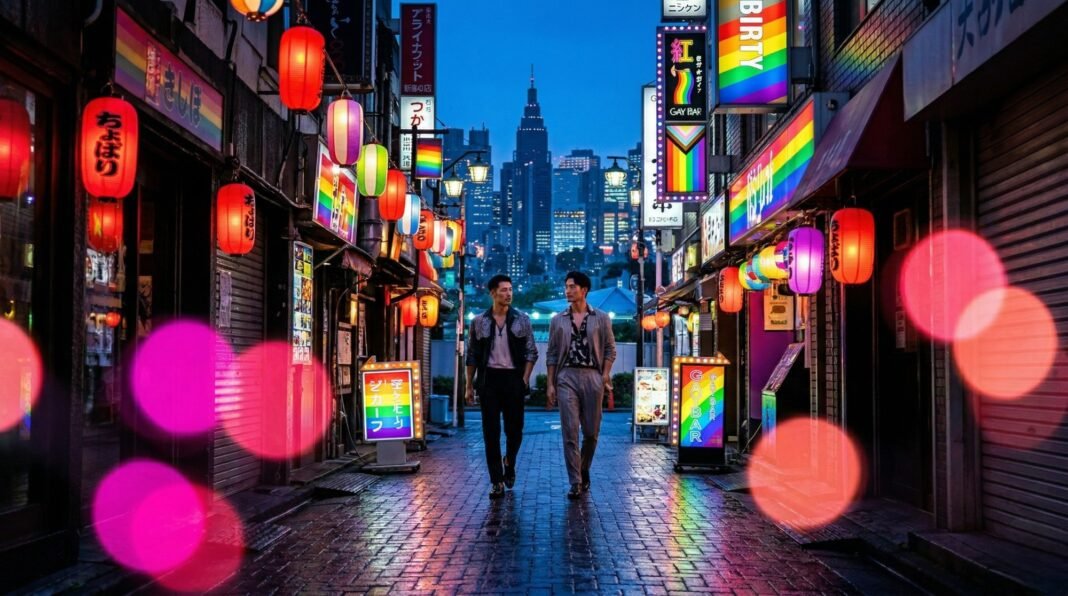
For our community, this cultural unlock hits differently. Queer men were grooming intelligently, moisturizing diligently, and shopping skincare counters long before it was culturally fashionable. The Manissance isn’t new to us. It’s just finally getting the budget it deserves.
Gen Z Didn’t Ask Permission — They Just Started Buying
The generation that grew up on TikTok tutorials and Reddit skincare forums didn’t inherit their fathers’ reluctance about beauty products. In 2024, 68% of Gen Z men in the US aged 18 to 27 used facial skincare, up from just 42% in 2022, according to Mintel — a jump of more than 25 percentage points in two years.
Evolving ideas about masculinity now celebrate self-care. Gen Z men are approaching skincare with fewer stigmas and more curiosity, treating it as a natural part of daily life. That openness is already filtering down to Gen Alpha teen boys, which suggests the upward trajectory in male usage isn’t leveling off anytime soon.
Social media has been the engine. On TikTok and Instagram, male creators post step-by-step routines, product breakdowns, and before-and-after results that emphasize subtle upgrades over dramatic transformations — and the hashtag #mensgrooming alone has surpassed 26 billion views on TikTok. The result is a generation that approaches beauty not as vanity but as vocabulary: a way of communicating intention, discipline, and self-respect.
A survey commissioned by Just for Men and conducted by Talker Research found that 68% of Gen Z and millennial men care more about their appearance today than they did five years ago. That’s not a market footnote. That’s a cultural declaration.
The Products Actually Changing Routines Right Now
So what are men actually reaching for in 2026? The product landscape has evolved well beyond the classic cleanser-and-moisturizer combo. Beast mode body care, bro brows, solid colognes, anti-grey hair serums, and workout recovery products are among the standout trends this year, according to Cosmetics Business.
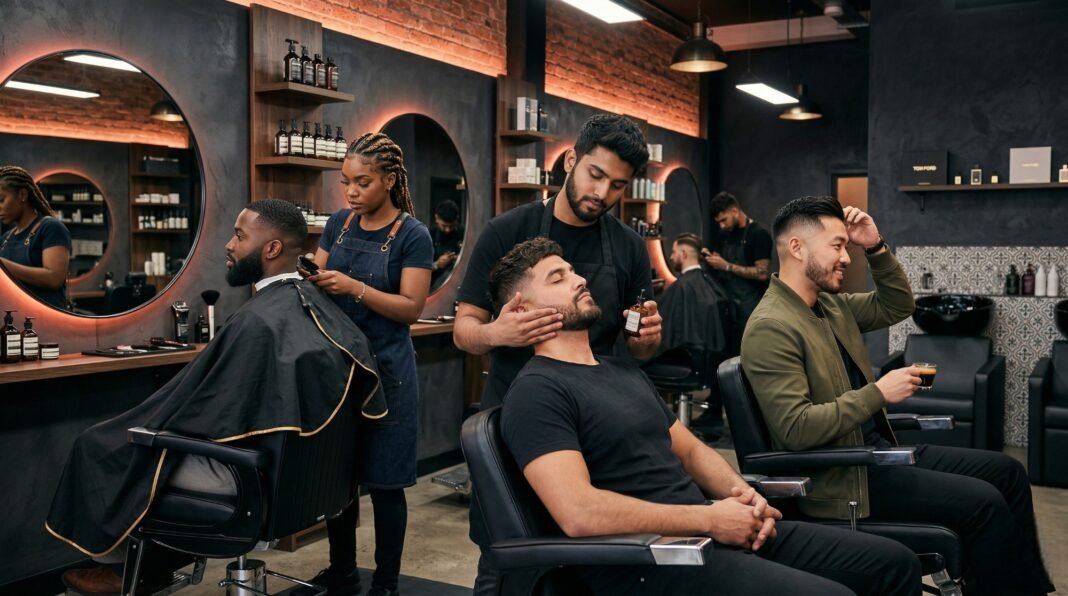
The brow moment deserves its own paragraph. Using an eyebrow pencil in 2026 is as unremarkable for men as reaching for beard oil or a styling product. Walk into a barbershop in any major city and you’ll see it playing out in real time. The women-only door closed a while ago — guys who want to look sharp figured that out and moved on.
At the skincare counter, the formulation conversation has leveled up considerably. Active ingredients have turned skincare into something close to a precision tool kit: niacinamide to regulate oil output, salicylic acid for congested pores, hyaluronic acid to lock in hydration. Men are reading ingredient labels. Comparing serums. Doing the work. Seventy percent of men now prefer grooming formulations made with natural or organic ingredients, with Gen Z leading the way.
Tweakments, Transparency, and What Comes Next
Perhaps the clearest sign that the Manissance is maturing is where men are heading beyond the bathroom cabinet. Interest in more intensive beauty treatments is rising fast, with the American Academy of Plastic Surgeons reporting a growing number of men pursuing cosmetic surgery, body augmentation, and non-invasive procedures like dermal fillers and facial neurotoxins like Botox.
From teenage boys co-buying luxury niche fragrances to decant and share, to the surge in male tweakments, new momentum is building at every price point and intensity level. The industry has noticed. As Delphine Horvath, professor of cosmetics and fragrance marketing at the Fashion Institute of Technology, put it: “Men’s beauty is one of the last categories left where brands can likely still see easy double-digit growth potential simply by showing up.”
The brands showing up best treat men as informed, sophisticated consumers rather than afterthoughts. This evolution has cleared space for a genuinely specialized product landscape — no longer just repackaged women’s products with “for men” slapped on the label. Brands are expanding into solutions for shaving irritation, acne, and targeted anti-aging concerns. More multi-functional products built around diverse skin tones, textures, and conditions are on the way. The Manissance is not a moment. It is a redefinition.
Frequently Asked Questions
What are the biggest men’s grooming trends in 2026?
The standout trends this year include beast mode body care, bro brows, solid colognes, anti-grey hair serums, and workout recovery products. Ingredient-conscious skincare and premium fragrance are also major growth areas — and if you’re not already nerding out over your serum stack, consider this your invitation.
How big is the men’s grooming market in 2026?
It’s projected to grow from $74.39 billion in 2025 to $79.31 billion in 2026, at a CAGR of 6.6%, with no signs of slowing through the rest of the decade. For context, the market is expected to hit $101.35 billion by 2030.
Are more men actually using skincare and makeup now?
Significantly more. The share of US men who say they never wear makeup dropped from over 90% in 2019 to roughly 75% in 2024, per Statista survey data — and industry experts believe openness to cosmetics is even greater heading into 2026. The direction of travel is unmistakable.
The Manissance was never about vanity. It’s about an entire generation deciding that looking after yourself is simply part of being well. From Gen Z co-buying luxury fragrances to experienced shoppers stacking clinical serums, the grooming landscape in 2026 is richer, more inclusive, and more interesting than it has ever been. At Facetheboys, we’ve always believed that how you present yourself is part of how you show up for yourself. Follow us for more on the culture, the products, and the conversations shaping modern gay life.