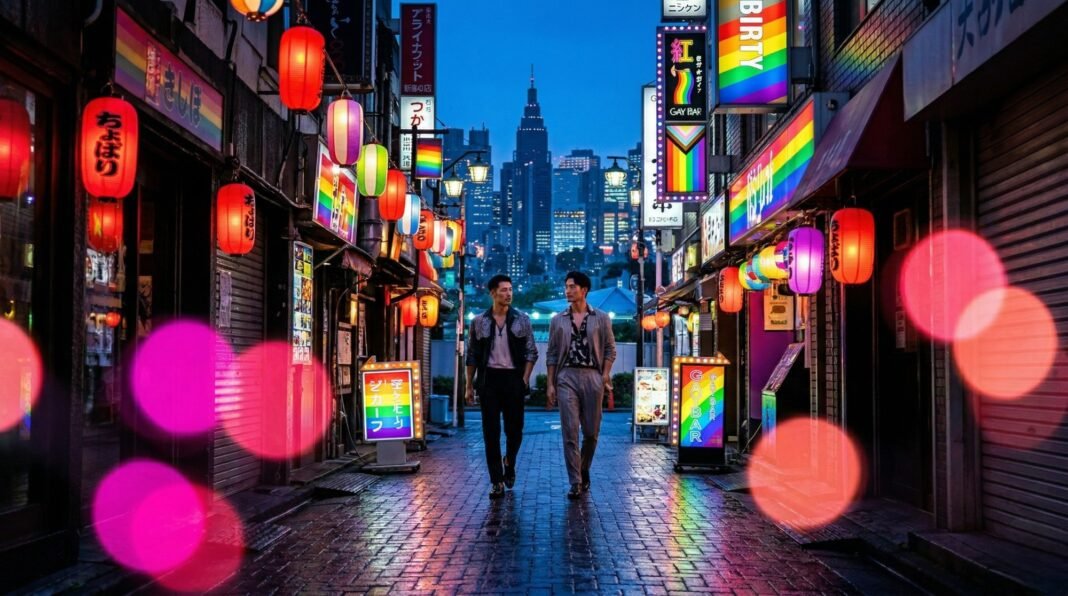
Japan is the only G7 nation on earth that does not legally recognize same-sex couples in any form at the national level — not a civil union, not a domestic partnership, nothing. While the rest of the world’s wealthiest democracies moved on, Japan’s queer couples have spent years watching their relationships debated in courtroom after courtroom, their love treated as a constitutional question mark. That question mark may finally be getting an answer. But not without a fight.
Six Lawsuits, One Historic Showdown
Japan’s Supreme Court is expected to issue a unified ruling on whether legal provisions blocking same-sex marriage are constitutional, after six related appeals were sent to the court’s Grand Bench. Let’s be clear about what that means: the Grand Bench is not where routine matters go. Chief Justice Yukihiko Imasaki presides, and NHK, Japan’s public broadcaster, confirmed that all 15 of the court’s justices will consider the case. When every single member of Japan’s highest court sits down together, what follows tends to land in history books.
The lawsuits — reported across media as the “Freedom to Marry for All” cases — were originally filed by 13 couples on Valentine’s Day 2019, in district courts across Nagoya, Osaka, Sapporo, and Tokyo. That coordinated filing on the most romantic day of the calendar was no accident. It was a statement. And it set off years of legal back-and-forth that has now landed, at long last, on the highest court’s desk.
A Courthouse Divided
What makes this case so compelling — and so necessary to resolve at the Supreme Court level — is that Japan’s lower courts have been all over the map. Five of Japan’s high courts, in Sapporo, Tokyo, Fukuoka, Nagoya, and Osaka, ruled that the provisions of the Civil Code and Family Register Act blocking same-sex marriage are unconstitutional. Then came the gut punch.
On November 28, 2025, a second Tokyo High Court ruling landed on the opposite side, finding that the ban does not violate Articles 24(1) and (2) or Article 14(1) of the Constitution. It was the final high court to weigh in, and it created a direct conflict among courts — leaving Japan without a uniform constitutional interpretation of marriage rights. One court said yes, one said no, and now the only institution with the authority to settle it has to step up. The contradictions of the lower courts have made this moment inevitable.
Politics Standing in the Way
The courts may be trending toward equality. Japan’s political leadership is a different story.
Prime Minister Sanae Takaichi, who became the country’s first female head of government last October, opposes marriage rights for same-sex couples and has reiterated the constitution’s framing of the family as an institution built around “the equal rights of husband and wife.” The Liberal Democratic Party, in power almost continuously since 1958, holds the same position. This is the core tension: a judiciary increasingly ruling that the ban is unconstitutional, and a legislature that simply refuses to act.
Here’s the critical distinction from the American system — Japan’s Supreme Court cannot directly grant the right to marriage equality. A ruling of unconstitutionality would effectively force the National Diet to amend the relevant laws, but “effectively force” and actually getting it done are two very different things in Tokyo’s current political climate. Meanwhile, polling consistently shows that a significant majority of Japanese people — particularly younger generations — support legalizing same-sex marriage or partnerships. The politicians are falling further behind where the public already stands.
What Same-Sex Couples Are Living With Right Now
While the legal battle plays out at the highest levels, real people are navigating a patchwork system that offers some visibility but no real protection. Same-sex couples are ineligible for the legal protections available to opposite-sex couples at the national level, though since 2015 many cities and prefectures have introduced “partnership certificates.” By 2025, those local programs cover over 92 percent of the population. But a certificate is not a marriage.
Partnership certificates do not confer rights like inheritance, spousal hospital visits, or parental recognition. Consider what that actually means: if your partner of twenty years is hospitalized, you may not be allowed into the room. If they die, you may have no automatic claim to what you built together. These are not abstract legal inconveniences. They are the daily realities of queer life in Japan.
There is some movement at the edges — Japan’s government has extended certain protections to same-sex couples by recognizing them as “de facto marriages” in a series of laws and ordinances. It is a step. It is nowhere near equality. And it underscores exactly how much is riding on what the Supreme Court decides next.
A ruling is expected in early 2027. That means same-sex couples in Japan are looking at at least another year of legal limbo — still loving, still building lives, still waiting to be seen as equal under the law of their own country.
Frequently Asked Questions
Is same-sex marriage legal in Japan right now?
No. Under current national law, the Civil Code and Family Register Act define marriage as a union between a husband and a wife. Nothing at the national level recognizes same-sex couples, full stop.
When will Japan’s Supreme Court rule on same-sex marriage?
According to NHK, the ruling is expected in early 2027. All 15 justices on the Grand Bench will hear arguments from both sides before delivering Japan’s first definitive constitutional ruling on the matter — so yes, this is worth marking on your calendar.
Which other Asian countries have legalized same-sex marriage?
Same-sex couples can legally marry in Taiwan, Nepal, and Thailand. Japan’s continued exclusion stands out even more sharply as the region begins to shift.
Japan’s Supreme Court is facing the defining civil rights question of its generation. Five high courts have already called the ban unconstitutional. A divided political class is digging in. Millions of queer people are living without full legal recognition, right now, today. The ruling expected in early 2027 will not just shape Japanese law — it will signal what kind of country Japan intends to be. The conversation, and the fight, are very much happening right now. Follow Facetheboys for continuing coverage of the global marriage equality movement and everything shaping queer life today.