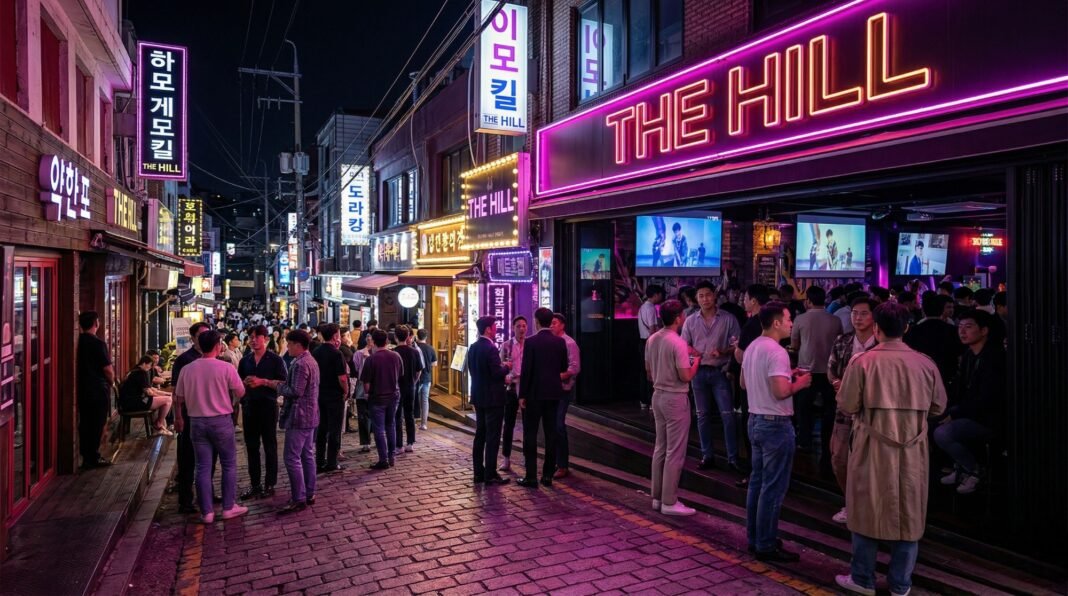
A 360-foot alleyway in Seoul’s Itaewon district has done more for queer community-building in South Korea than most government policy ever has. Known colloquially as “The Hill,” this compact stretch sits at the heart of Seoul’s LGBTQ+ life. Small in geography, enormous in significance — and in 2026, it is more relevant than ever.
The Scene on The Hill
Formally known as Homo Hill — also called LGBTQ Street, officially Usadan-ro 12-gil — this pedestrian strip punches so far above its weight it should be exhausted. Shops, cafes, restaurants, gay clubs and bars, and some elevated terraces perfectly designed for beer, conversation, and serious people-watching line both sides. Colorful graffiti and murals cover the walls and ground, making the acceptance of LGBTQ+ individuals visible and legible from the moment you arrive.
One logistical note that will save your night: do not show up before midnight expecting a party. The Hill runs Thursday through Sunday, and things don’t get serious until around 1 a.m. Clubs don’t start thinning out until 5 or 6 a.m. Plan accordingly. Bring energy to spare.
The most popular bars on The Hill include Queen, which draws a young, lively crowd for weekend revelry, and Why Not Bar, a gay bar with high ceilings, modern interiors, friendly staff, and K-pop bops on the weekend. Trance is another fixture. New arrival Rabbithole Arcade Pub, located in the adjacent Haebangchon neighborhood, has carved out its own loyal following with drag shows running Fridays and Saturdays.
K-Pop Is Not Just the Background Music
One of the most electrifying things about Seoul’s gay scene right now is what’s playing inside the clubs — and why it matters. Travelers who have moved extensively across Asia all notice the same thing: K-pop dominates queer venues from Bangkok to Taipei. But at the genre’s actual home, something different and genuinely thrilling happens.
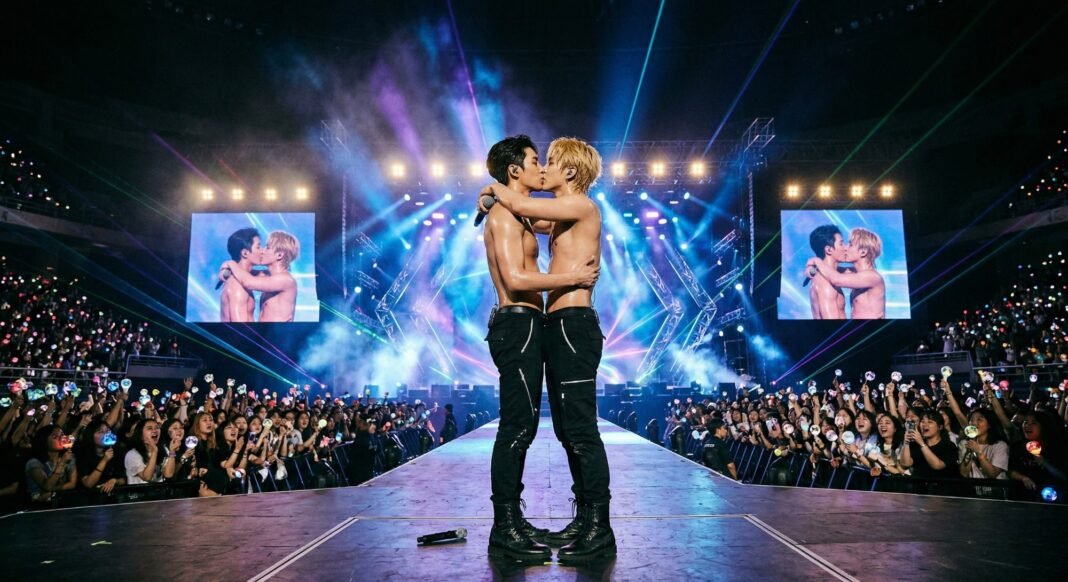
Gay bars and clubs like Ground and Ping are fully dedicated to K-pop, with queues stretching several blocks on weekends, filled with guys eager to show off their choreos and formation changes. This is not passive listening. It is synchronized, choreographed, joyful performance — a reclaiming of a cultural export the mainstream Korean entertainment industry has long kept at arm’s length from openly queer identity.
Across The Hill, sets blend international DJs, Top 40, and K-pop into a mix that feels authentically global. A tourist from Toronto might find himself learning a synchronized BTS formation alongside a Seoul office worker who saved every ounce of energy for Saturday night. That moment? That’s the whole point.
Who Is Actually Going
Itaewon is Seoul’s international hub, home to a significant expat community, so the mixed crowd on The Hill should surprise no one. First-time travelers, long-term expats, and locals comfortable moving between the two worlds many queer Koreans inhabit all show up here. The result is a scene that feels genuinely welcoming rather than self-consciously curated.
Seoul can feel low-key for LGBTQ+ visitors on the surface, but the scene is real if you know where to look. Most queer nightlife clusters around Jongno and Itaewon. For a more local experience, Jongno is historically significant — a Japanese man opened Seoul’s first gay bar there in the late 1970s, and today around 75 small gay bars cluster together in unassuming blocks, not unlike Tokyo’s Ni-chōme 2 in Shinjuku.
Some useful context: South Korea remains a sexually conservative society. Homosexuality has never been criminalized, but the absence of a law against something is not the same as acceptance. Attitudes are shifting, especially in cities and among younger Koreans. Public affection still draws attention outside queer venues. Inside them, you can relax, meet people, and have a completely normal night out. The Hill functions as a protected pocket of openness in a country still working through complicated questions about identity and rights — which makes the energy inside it feel all the more charged.
Plan Your Trip
The best time to visit Seoul’s gay scene is when the city itself turns up the volume. The biggest annual moment is the Seoul Queer Culture Festival, held in early summer, featuring a pride-style festival and parade that draws large crowds and a full calendar of extra parties. Most events continue at Homo Hill after the parade wraps. For a first trip, aim for late spring — May to early June — or early autumn, September through October.
Getting there is easy. Take the subway to Itaewon Station on Line 6, Exit 3, and walk roughly five minutes. Alternatively, any taxi driver will understand if you ask for Itaewon’s LGBTQ+ street.
For accommodation, the Nouvelle Seoul Hotel on Hooker Hill and the Hamilton Hotel — close to the Glam Lounge, just across the main road from Homo Hill — are both well-regarded options. For a more luxurious stay, the Mondrian Hotel in Itaewon is the move: the reception area alone smells exquisite, and the hotel serves as the venue for major gay events including the Moonlight Circuit Festival. One practical tip for budget travelers: the subway closes around midnight, so staying in Itaewon itself makes late nights considerably less complicated.
Dress code on The Hill is refreshingly casual. Come as you are, stay until sunrise, tip your bartender.
Frequently Asked Questions
Is gay Seoul Itaewon nightlife safe for tourists in 2026?
The Hill is a recognized safe space for LGBTQ+ people, and within the Itaewon area you can largely relax. That said, public affection outside queer venues can still draw unwanted attention — read the room once you leave the street.
What is the best night to go out on The Hill in Seoul?
Saturday, and it isn’t close. The scene is quiet earlier in the week and even relatively subdued on Fridays. Locals save their energy and their budget for Saturday night — and when Saturday comes around, they genuinely go all out.
Is there a Seoul gay Pride event I can attend?
Yes — the Seoul Queer Culture Festival is a series of open cultural events held every summer. Running since its first edition in 2000, it has grown steadily and now includes highlights like the Seoul Queer Parade and the Korea Queer Film Festival.
The Hill is small, steep, and stays open until the Seoul sunrise turns the sky pink over Namsan Mountain. What it lacks in square footage it makes up for in soul, K-pop remixes, and the kind of community that only emerges when people carve out joy in complicated circumstances. If Asia is on your 2026 itinerary and Seoul isn’t on it yet, consider this your sign. Follow Facetheboys for more on where gay culture is thriving, evolving, and dancing until dawn.