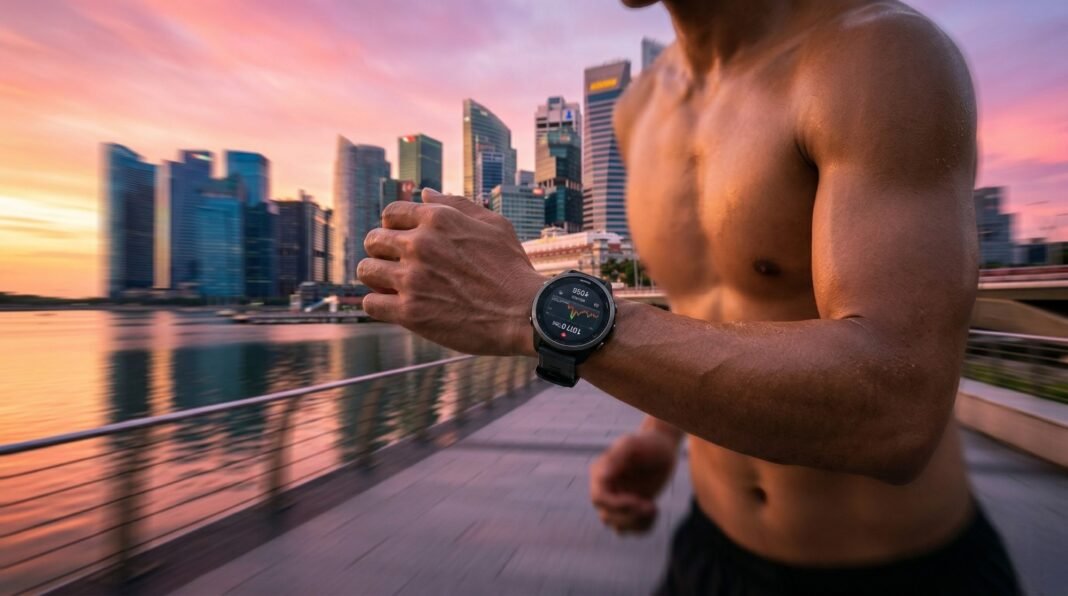
Five hundred sixty-two million people are wearing a fitness coach on their wrist right now — and most of them are using it to silence alarms. That figure represents a 23.7% increase from 2024, and the devices behind it have quietly evolved from glorified step counters into something far more interesting. If those pulsing green lights on your wrist still feel like background noise, science would like a word: you are sleeping on the most capable personal trainer you have ever owned.
From Step Counter to Body Oracle
The smartwatch you bought because it looked sharp with brunch is no longer just a glorified pedometer — and it hasn’t been for a while. Advanced biosensors now capture fall and crash detection, heart rhythm, blood pressure, blood glucose, and skin temperature. That is a significant leap from the chunky rubber fitness bands of a decade ago that counted your steps and called it a day.
By 2026, fitness tracking has spread well beyond the smartwatch. The sensors that monitor your body’s data live in sports watches, smart rings, and screenless straps. The conversation has shifted from counting steps to understanding recovery, stress, sleep quality, and training load — a whole physiological portrait, built in real time, available 24 hours a day without judgment, a cancellation fee, or a parking problem.
For anyone who has been ghosted by a personal trainer, priced out of boutique fitness studios, or intimidated walking into a gym full of strangers, that shift is genuinely transformative.
The Science Behind the Buzz
For the 20th year, the American College of Sports Medicine published its annual Worldwide Fitness Trends forecast. The number one trend for 2026 is Wearable Technology. The report draws on a survey of 2,000 clinicians, researchers, and exercise professionals — not a tech publication handing out awards, but sports medicine professionals and exercise physiologists saying, collectively, that the device on your wrist is reshaping how human beings move and recover.
“Real-time physiological data, such as heart rate variability and sleep patterns, is shaping how people train and recover. These tools allow for more personalized adjustments that improve results and reduce injury risk,” said ACSM lead author Dr. Cayla R. McAvoy.
The data backs up the enthusiasm. In 2024, more than 70% of wearable users reported applying their device’s output to inform exercise or recovery strategies. People are not just collecting numbers for the aesthetic satisfaction of a full activity ring. They are changing their behavior because of what their devices tell them — which is exactly what a good trainer does.
Why This Moment Hits Different for the LGBTQ+ Community
Let’s be direct. Gay men, queer people broadly, and members of the LGBTQ+ community have historically had a complicated relationship with fitness culture. The pressure to look a certain way, the sometimes unwelcoming atmosphere of traditional gym spaces, the cost barriers to premium wellness experiences — these are real and documented frustrations. Wearable technology offers something quietly radical: a fitness environment that is entirely your own.
The ACSM report notes that these tools support self-monitoring, boost engagement, and reinforce healthy habit-building over time. For someone who prefers working out at home, running alone through the city at midnight, or building a circuit in their living room before a night out, a smartwatch is an endlessly patient, completely non-judgmental companion.
There is also the mental health dimension, which resonates strongly in our community. One national survey found that 78% of exercisers cited mental or emotional well-being as their top reason for working out — ahead of physical fitness or appearance goals. Devices that track stress markers, sleep quality, and recovery are not just fitness tools. They are wellness tools, and that distinction matters enormously when physical activity is being used to manage anxiety, depression, or the daily weight of moving through a world that was not always designed with you in mind.
How to Actually Use the Thing You Already Own
Here is where most wearable owners drop the ball. They charge the device, strap it on, and then spend six months staring at their resting heart rate like it is abstract art. Dr. McAvoy put it plainly: “Nearly half of U.S. adults now own a fitness tracker or smartwatch, so the question is no longer whether people will use wearables. What matters now is teaching people how to use them in ways that best support their health and behavior change.”
Start with sleep. Most devices now offer detailed sleep staging data, and understanding your recovery is the foundation of everything else. From there, use heart rate zone training to make your cardio sessions more intentional — not every run needs to feel like you are fleeing a situation. Heart rate variability, now standard on most mid-range and premium devices, tells you whether your nervous system is primed for a hard session or needs a rest day. That single metric can prevent the kind of overtraining that sidelines people for weeks.
A note of calibration: the ACSM acknowledges that rapid innovation in wearables often outpaces clinical validation. Treat individual readings as data points, not diagnoses. The insight lives in the patterns, not the anomalies. Consistency over time is everything.
The global fitness tracker market sits at approximately $77.7 billion in 2026 and is forecast to reach roughly $187.2 billion by 2032. That level of investment means the technology will only get sharper and more accurate. The wrist real estate game is fierce right now, and the competition benefits you.
Frequently Asked Questions
What is the best smartwatch for fitness tracking in 2026?
Honestly, it depends on your phone and your priorities. Apple Watch is the natural pick for iPhone users. Samsung Galaxy Watch plays best in the Android ecosystem. If you are a serious endurance athlete who wants advanced metrics and a battery that actually lasts, Garmin is the move.
Is the health data from smartwatches actually accurate?
Mostly useful, sometimes approximate. Trends and patterns over time are where the real value lives — not individual readings treated as clinical diagnoses. Think of your device as a highly informed training partner, not a cardiologist.
Why is wearable technology the number one fitness trend for 2026?
The American College of Sports Medicine’s annual Worldwide Fitness Trends forecast — based on a survey of 2,000 clinicians, researchers, and exercise professionals — put wearables at the top for 2026. The ranking reflects how thoroughly these devices have been adopted across every demographic and fitness level. When the sports medicine community agrees on something this loudly, it is worth hearing.
The novelty era is over. What sits on your wrist in 2026 is a legitimate health tool — one that tracks your heart, your sleep, your stress, and your readiness, without requiring a gym membership, a spotter, or a changing room that makes you feel like an outsider. The ACSM has spoken, the data is clear, and your device is already running the numbers. The only move left is to actually pay attention to them. For more stories where fitness, culture, and queer life intersect, follow Facetheboys.